Projects
-
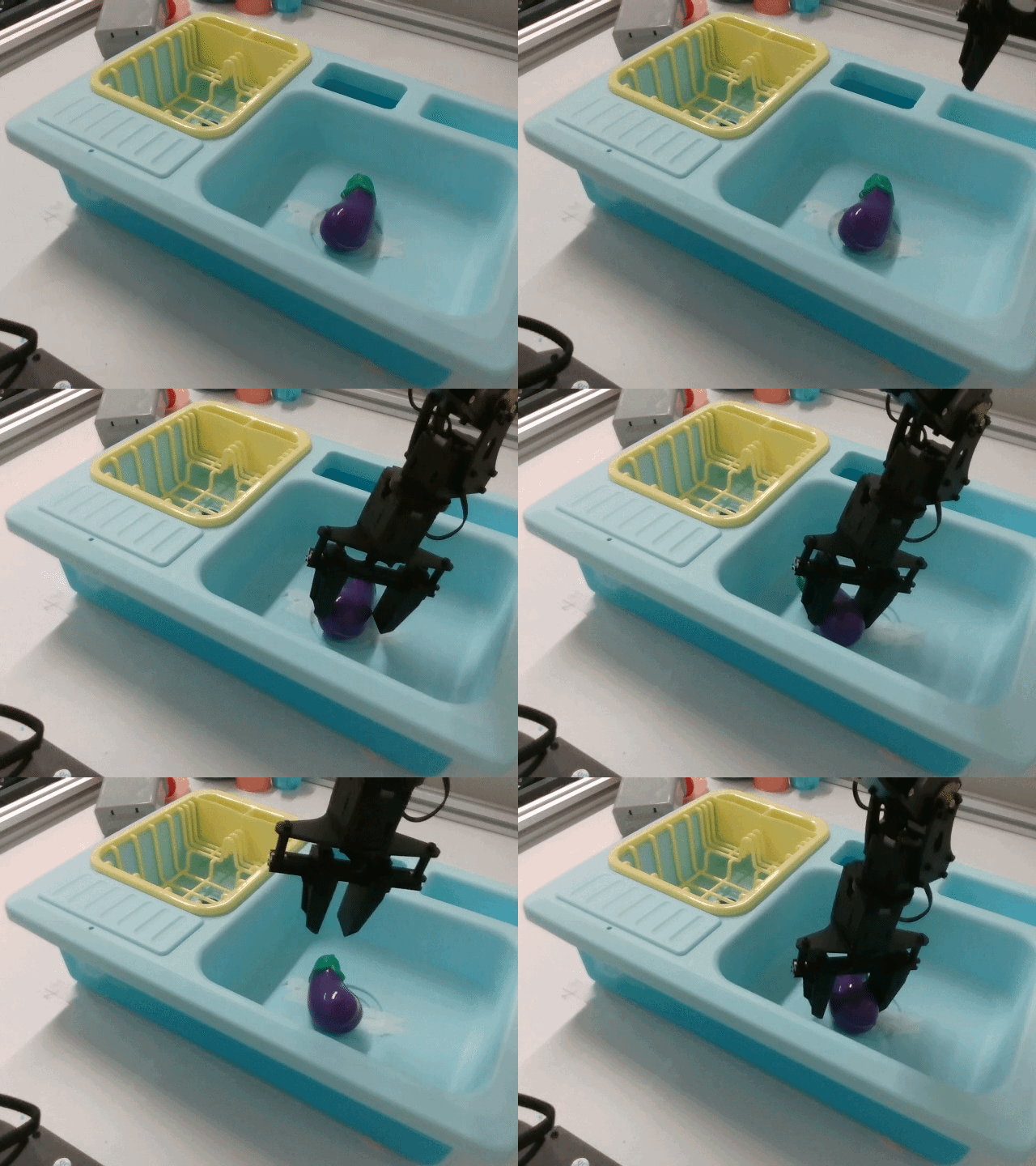 Failure Prediction for Generative Robot Policy
Technologies: PyTorch, Transformers, GRU, TCN, Hydra, Weights & Biases, SLURM, Big Red 200 (HPC)
Worked on mechanistic interpretability and runtime failure prediction for Vision-Language-Action (VLA) robotic policies by studying how successful executions evolve in latent feature space over time. Extended the SAFE (NeurIPS 2025) framework with GRU, Transformer, and TCN temporal models, building large-scale HPC evaluation pipelines on Indiana University's Big Red 200 cluster for zero-shot failure detection, trajectory analysis, and architecture ablation studies across robotic manipulation tasks.
-
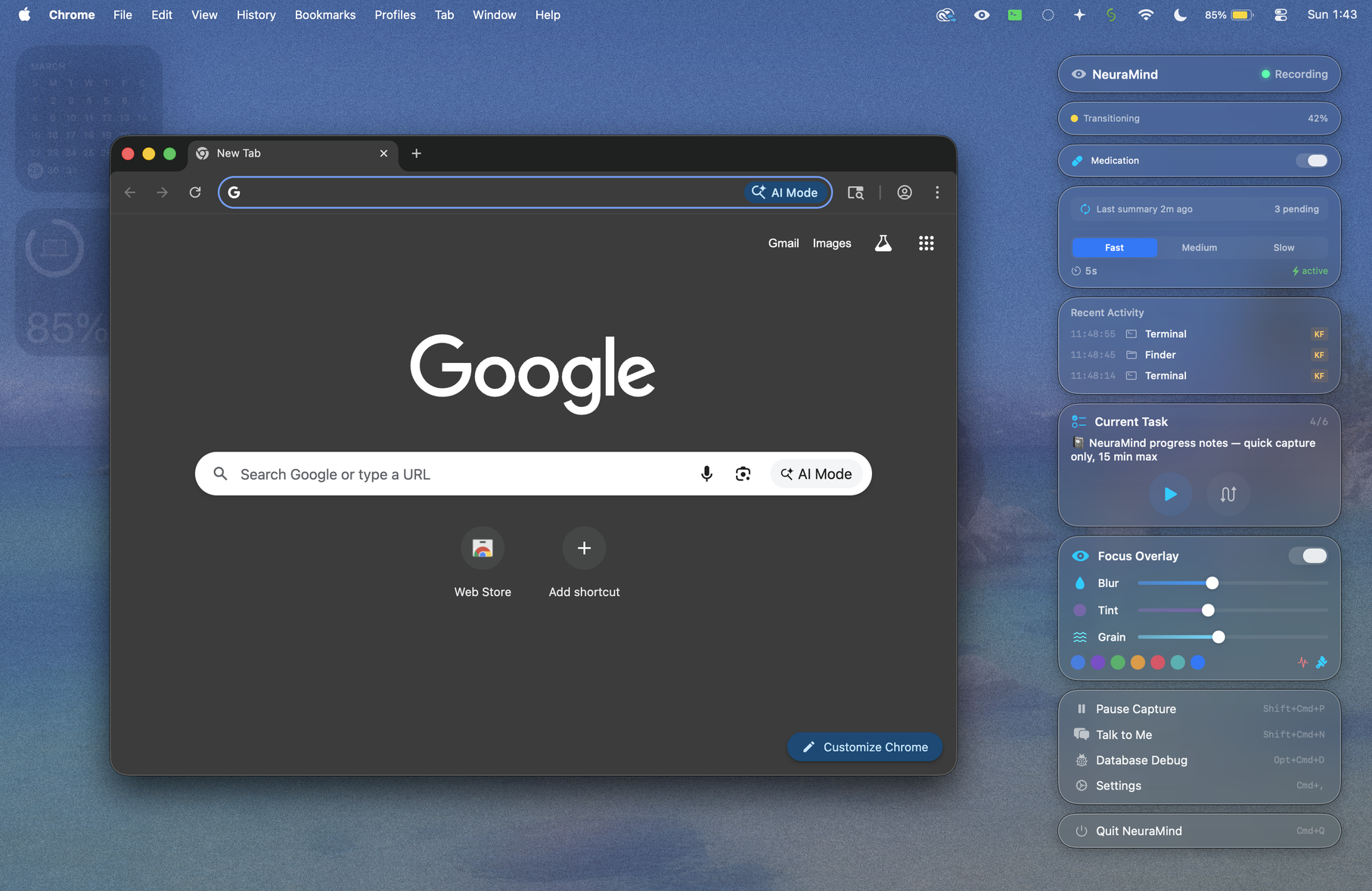 NeuraMind
March 2026 (Claude Builder Club Hackathon @ IU – 1st Prize)
Technologies: Swift (macOS), Claude AI (MCP), SQLite, Core ML, Accessibility APIs, Screen Recording APIs
Built a privacy-first macOS ambient memory system that captures and reconstructs work context using real-time activity signals and Claude AI. Enables focus tracking, context recovery, and AI-generated workflow summaries with a local-first architecture and optional semantic reasoning layer.
-
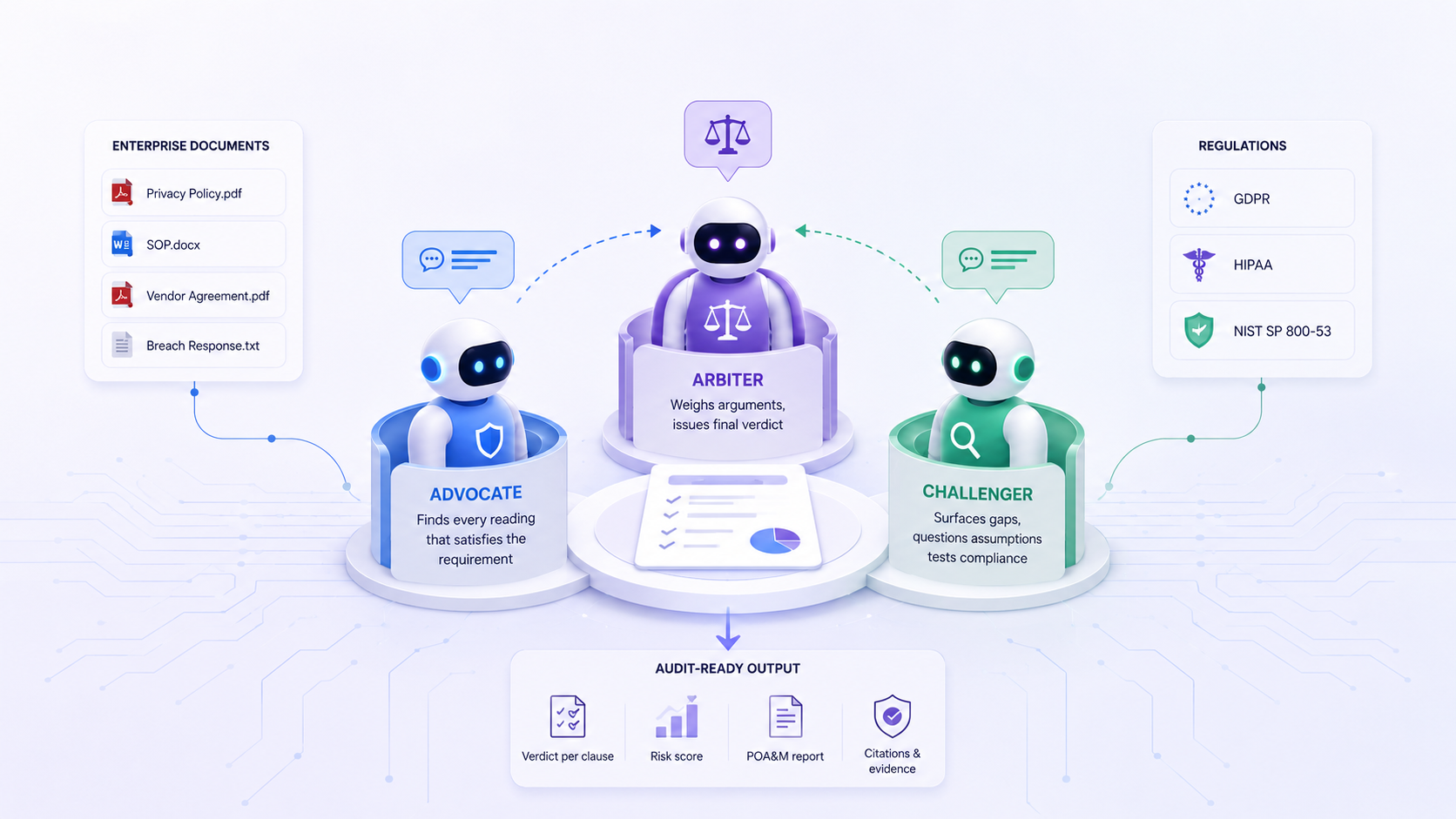 Agentic AI Compliance Monitoring System
Technologies: LangGraph, FastAPI, Qwen3 (local LLM), ChromaDB, SQLite, RAG (Sentence Transformers), Cross-Encoders, Jinja2, PyMuPDF
Built an agentic compliance auditing system using multi-agent debate (Advocate, Challenger, Arbiter) to evaluate enterprise policies against GDPR, HIPAA, and NIST standards, generating audit-ready POA&M reports. Designed a full RAG pipeline with vector retrieval and cross-encoder reranking for clause-level compliance detection across 1K+ policy sections. Integrated adaptive regulation monitoring, semantic drift detection, and fully local LLM execution for zero-cost, fully auditable reasoning with end-to-end traceability.
-
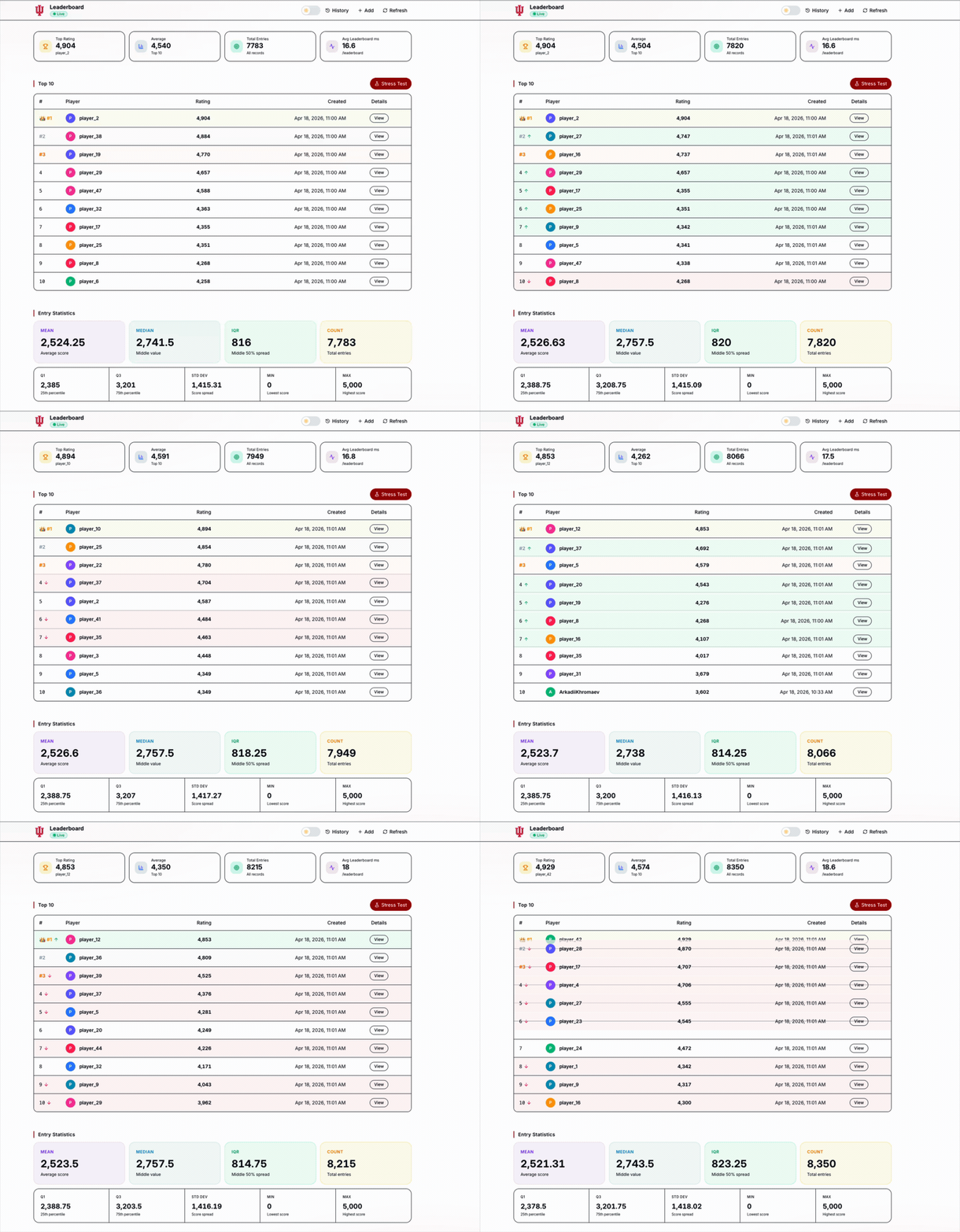 Dynamic Leaderboard Ranking
Technologies: FastAPI, PostgreSQL, Redis, Docker, React (Vite), TypeScript, AWS EC2, Vercel
Built a real-time scalable leaderboard system in 24 hours simulating chess-scale ranking workloads with high read/write concurrency. Designed a hybrid architecture using FastAPI + Postgres for durability, an in-memory skip list for O(log N) ranking and percentile computation, and Redis caching for low-latency reads. Applied system design principles like write-ahead logging, separation of read/write paths, async processing, and cache-aside strategy to ensure scalability, consistency, and performance under heavy load.
-
 NovaNewz
December 2025
Technologies: Cloudflare (Workers, Vectorize, D1, Workers AI), Next.js, TypeScript, Python
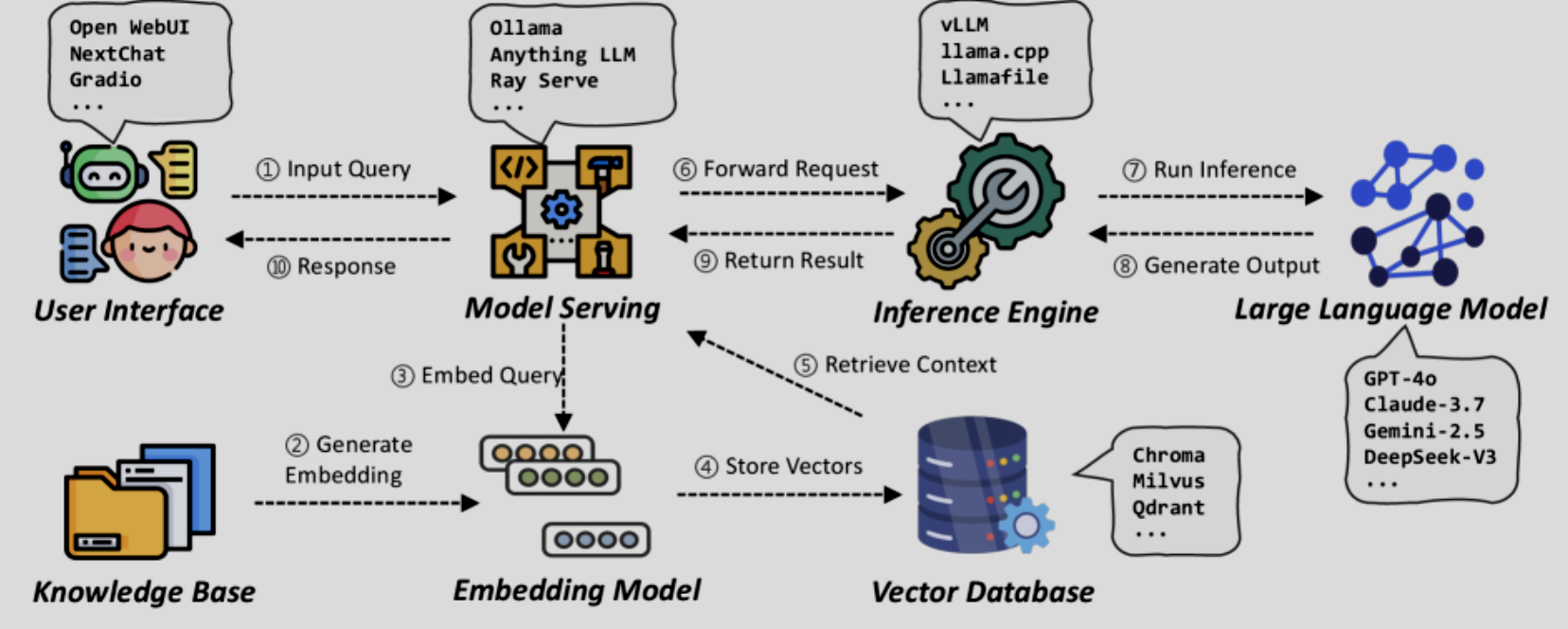
Built a serverless AI news engine using Cloudflare's edge stack to deliver fast, context-aware summaries with a RAG pipeline powered by Vectorize retrieval and Llama 3 generation. Developed a scalable ingestion and indexing pipeline using Workers AI for embeddings and D1 for storage, enabling continuous updates and a smooth user search and reading experience.
-
 DocSpot
May 2024
Technologies: ElasticSearch, FAISS, Langchain, MongoDB, React, Flask
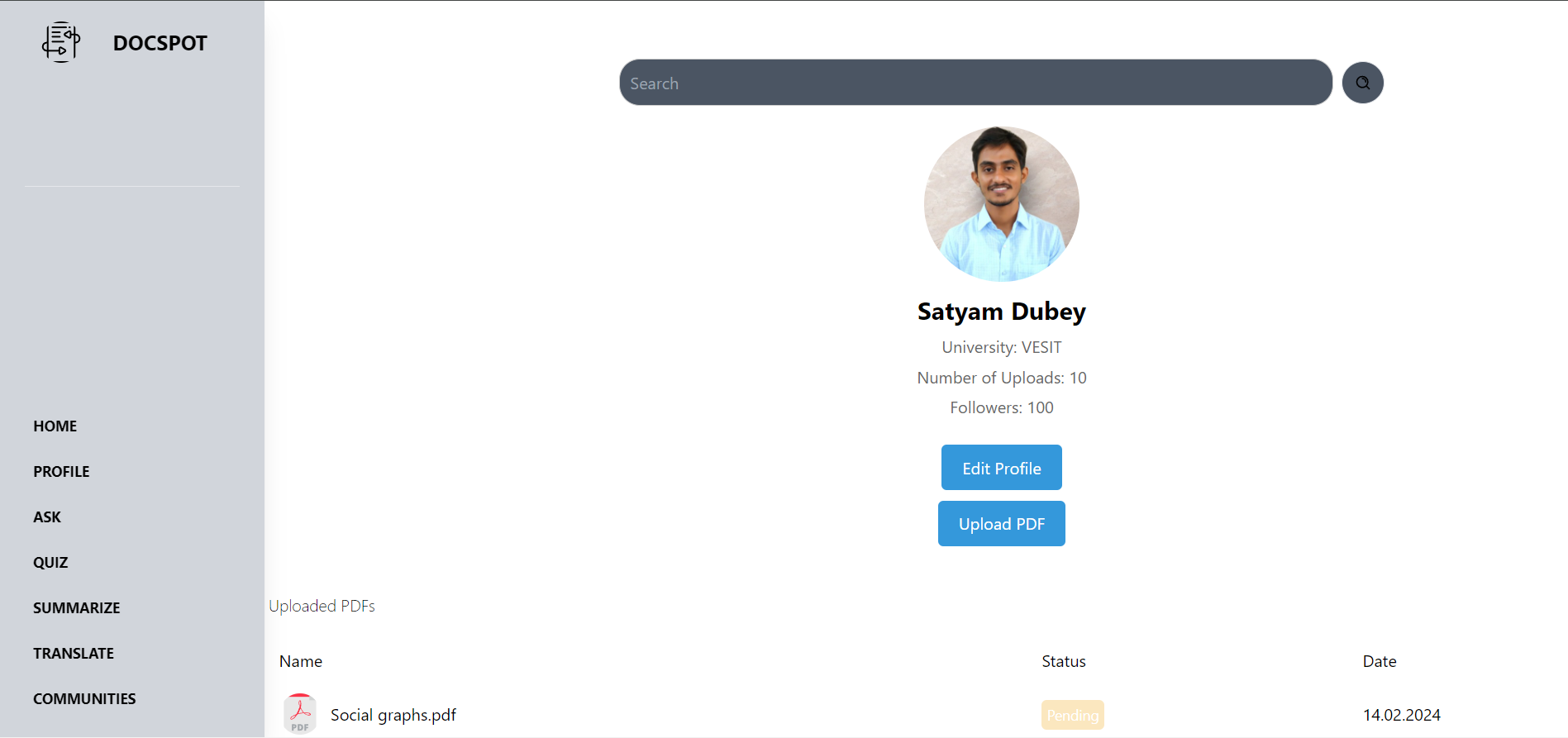
Built a multilingual academic research assistant using Gemini-powered reasoning and Retrieval-Augmented Generation (RAG) architecture. Enabled real-time chat, translation, and document insights. Reduced average search latency by 43% by integrating ElasticSearch (keyword search) with FAISS (semantic search). Incorporated a T5-small summarization pipeline to convert complex research papers into concise, digestible summaries.
-
 SecureGANs
April 2024
Technologies: GANs, Flask, React, U-Net
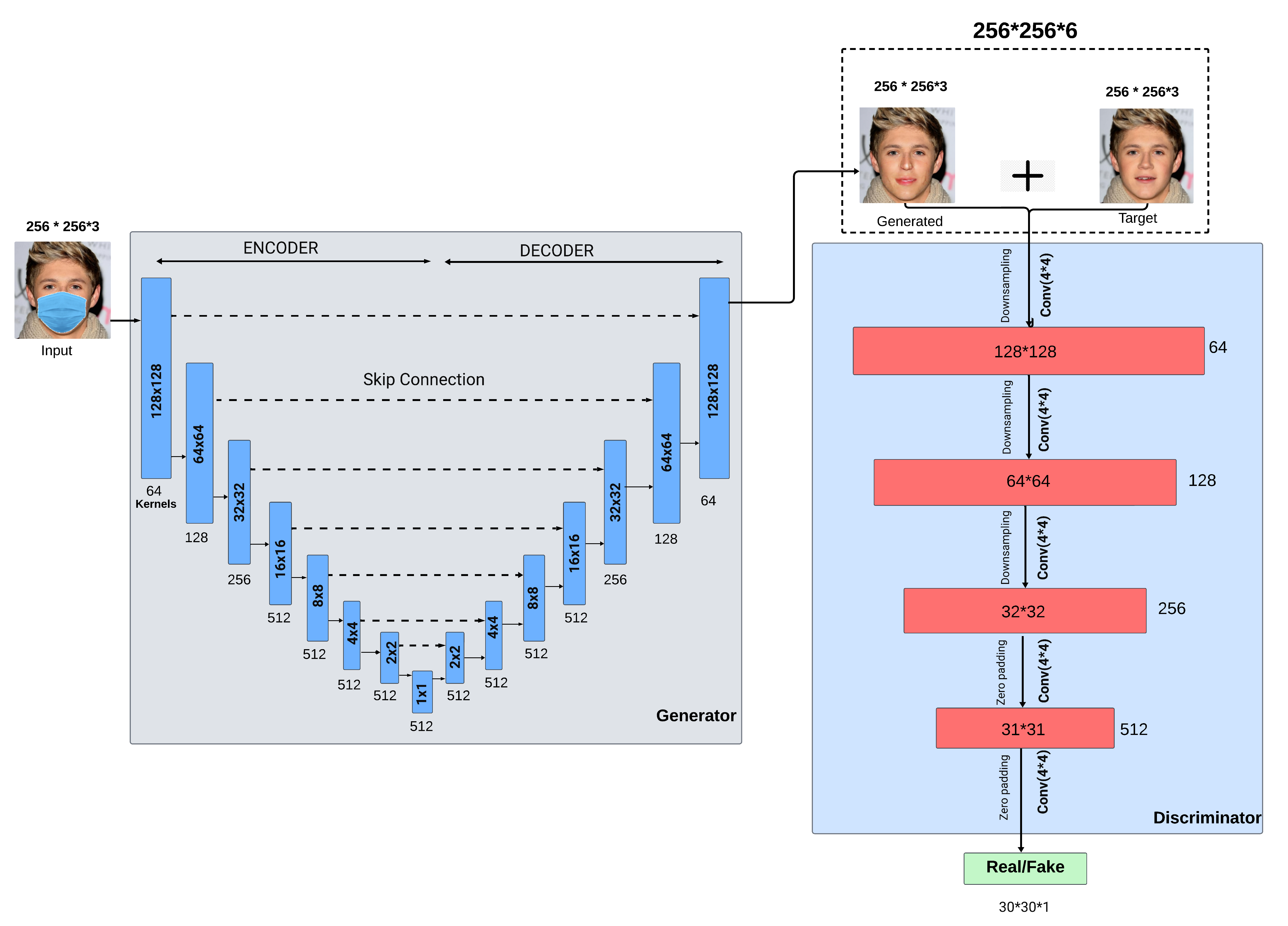
Designed a full-stack web system to restore masked or occluded facial features using a GAN-based image inpainting model. Employed a dual-path U-Net ensemble architecture, achieving PSNR of 22.25 and SSIM of 0.874. Project results were published in the Journal of Electronic Systems (JES).
-
 Connect-4 AI
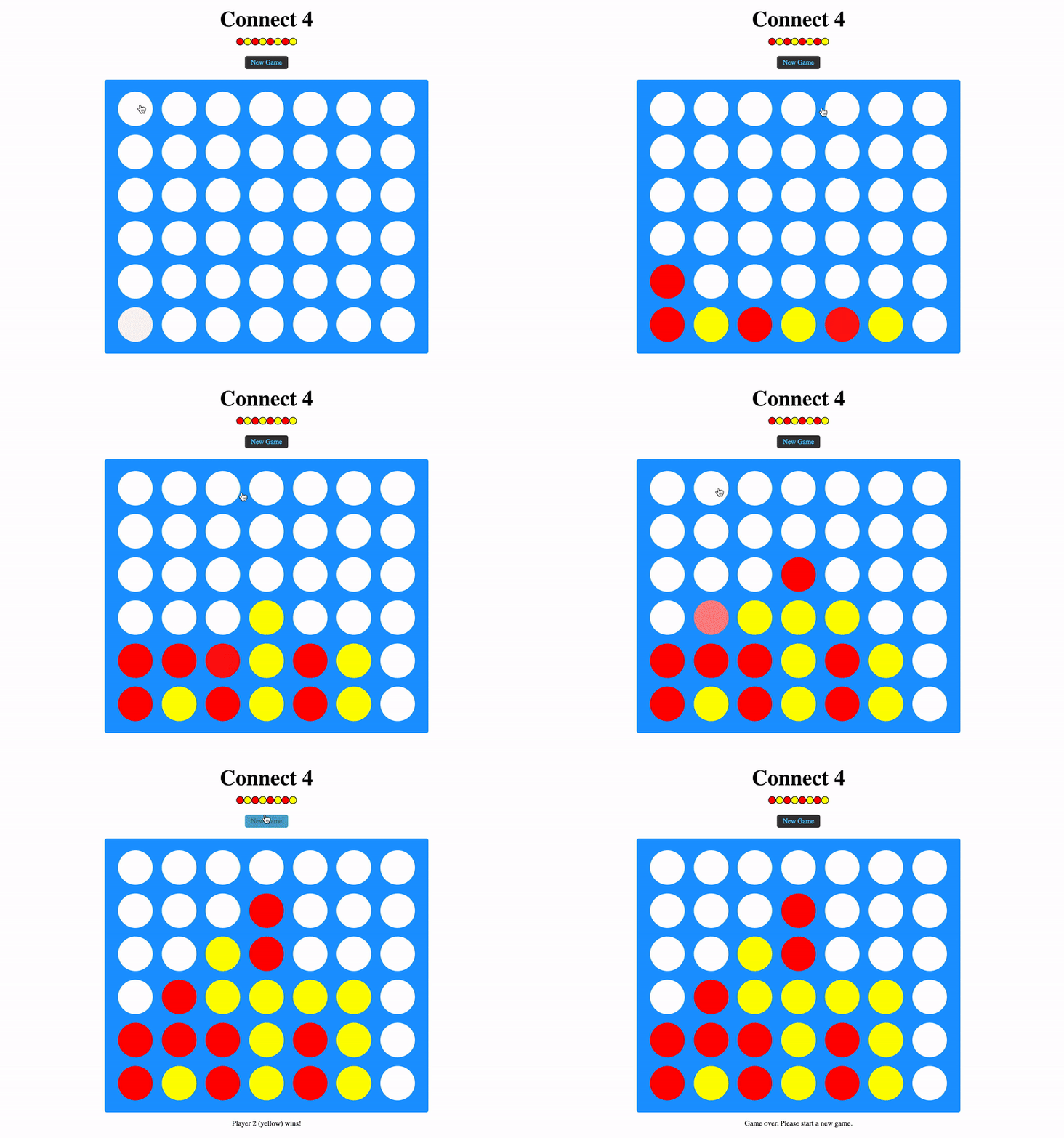
January 2024
Technologies: Python, DQN, Reinforcement Learning
Developed an AI for Connect-4 using Deep Q-Learning, comparing exploration strategies like epsilon-greedy and Upper Confidence Bound (UCB). Created an evaluation framework to benchmark 5+ DQN variants against minimax-based opponents. Achieved a 78% win rate in simulations against baseline algorithms.